Tendering Guide
Roofing
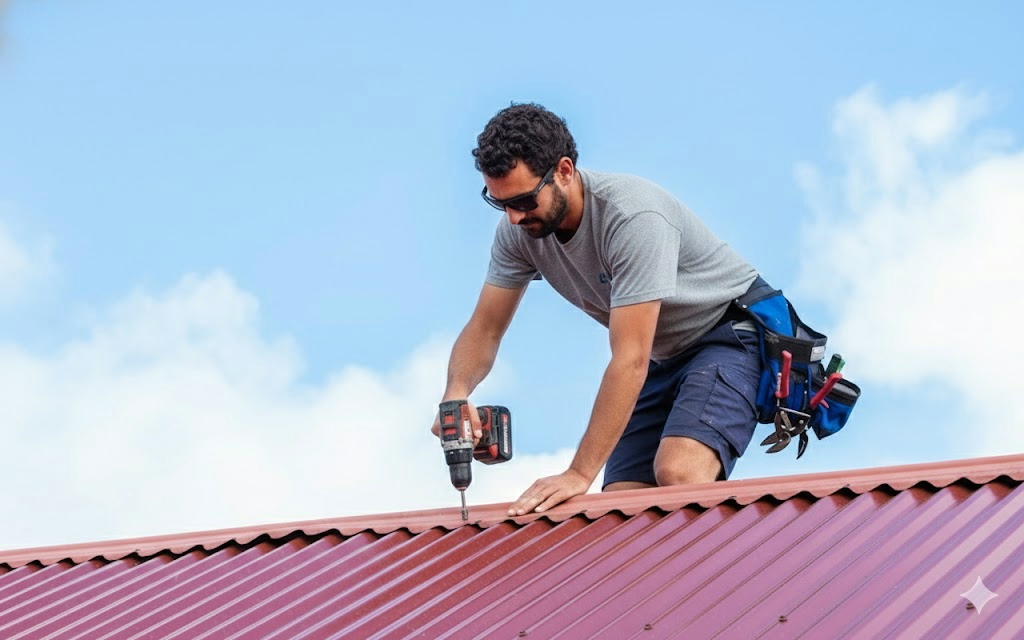
Roofing contractors tender for government building roof replacement programs, commercial building maintenance contracts, insurance company storm damage repair panels, industrial facility roofing projects, heritage building restoration, and strata roofing maintenance agreements. Roofing tenders carry unique safety considerations given the work-at-height risks, and evaluators heavily weight safety management systems alongside technical competence, material specifications, and warranty provisions. A thorough tender response that addresses both the technical roofing requirements and the safety management obligations will always outperform a price-focused submission.
What evaluators look for
- Trade licences and qualifications for all roofing systems in the scope (metal, tile, membrane, slate)
- Height safety management — fall prevention plans, edge protection, harness systems, rescue procedures
- Experience with the specific roofing types and building classifications in the contract
- Material specifications, manufacturer approvals, and warranty provisions
- Asbestos awareness training and licensed asbestos removal capability (if applicable)
- Weather contingency planning and project scheduling methodology
- Insurance coverage including public liability, workers compensation, and height work endorsements
Tips for a winning bid
Make your height safety plan comprehensive and site-specific
Roofing is one of the highest-risk trades. Your Safe Work Method Statement for height work should be detailed and specific — not a generic template. Cover fall prevention hierarchy (elimination, passive barriers, work positioning, fall arrest), edge protection systems, harness inspection and tagging regime, rescue plan for a fallen worker, and weather monitoring for wind and wet conditions. Evaluators scrutinise this section intensely.
Specify materials with manufacturer and warranty details
Name the exact roofing products you'll use — manufacturer, product line, colour, profile, thickness, and warranty period. Include manufacturer technical data sheets and confirm you're an approved installer (many manufacturer warranties are void if installed by non-approved contractors). "COLORBOND® Ultra steel in Basalt®, 0.48mm BMT, installed per BlueScope specifications with 30-year warranty" is professional.
Address asbestos risk if the contract involves existing buildings
Many pre-1990 buildings contain asbestos roofing materials. Describe your asbestos awareness training, your process for identifying suspected asbestos before starting work, and whether you hold a licensed asbestos removal licence or will engage a licensed removalist. This shows evaluators you understand the regulatory obligations and won't create a compliance crisis.
Include a detailed project methodology with staging and weather contingencies
Describe your approach to roof access, material staging and storage, stripping and disposal of existing materials, substrate preparation, installation sequence, flashing and penetration waterproofing, and final inspection. Include your weather contingency plan — what wind speed and rainfall thresholds stop work, how you temporarily weatherproof a partially stripped roof overnight.
Provide a transparent pricing breakdown
Break your pricing into roof area quantities, material costs (per m²), labour costs, scaffold/edge protection hire, waste disposal, and any provisional sums for latent defect repairs. Evaluators distrust lump-sum roofing quotes because hidden costs often emerge once existing materials are stripped. Transparency builds trust.
Common mistakes to avoid
- Submitting a generic height safety plan that isn't specific to the project or building type
- Not specifying roofing materials with manufacturer names, product codes, and warranty terms
- Failing to address asbestos identification and management for works on existing buildings
- Not including weather contingency planning and temporary weatherproofing procedures
- Omitting scaffold and edge protection plans from the safety methodology
The winning edge
Roofing tenders are evaluated with a magnifying glass on safety. The contractor who demonstrates that every aspect of the work has been risk-assessed — from the access method to the weather contingency to the emergency rescue plan — and combines that with precise material specifications and transparent pricing will win. In roofing, proving you're safe is just as important as proving you're competent.
Sources & further reading
- AusTender — find & respond to Australian Government tendersOfficialAustralian Government — Department of Finance
- Housing Industry AssociationHIA
- Work health and safety dutiesOfficialSafe Work Australia
Ready to analyse your roofing tender?
Upload your RFT document and get every requirement extracted into a structured checklist.
Start Analysing